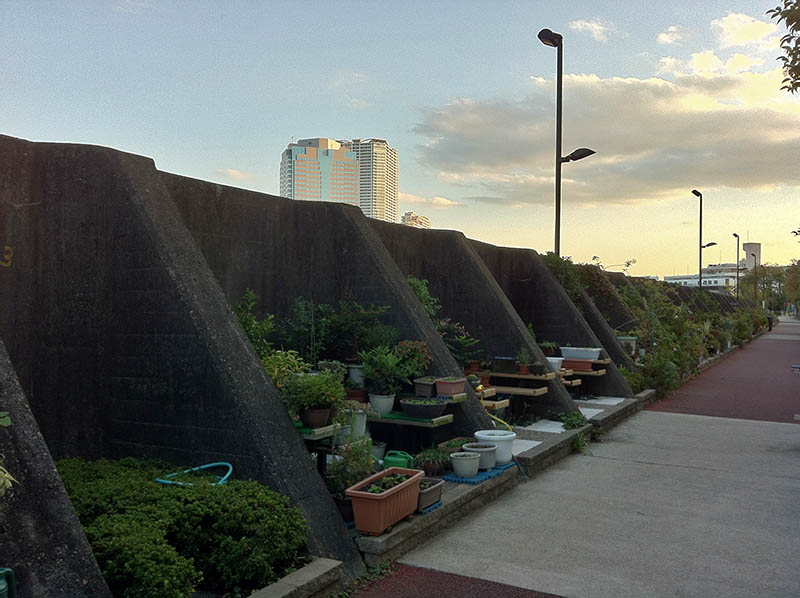
I sighted these tsumani walls made city gardens in Tsukuda (which is on a small reclaimed land island in Chuo ward, about 3 kilometers from the central station).
Author Archives: benbansal
Cityscape
Somewhere in Nihonbashi:
Shimizu headquarters
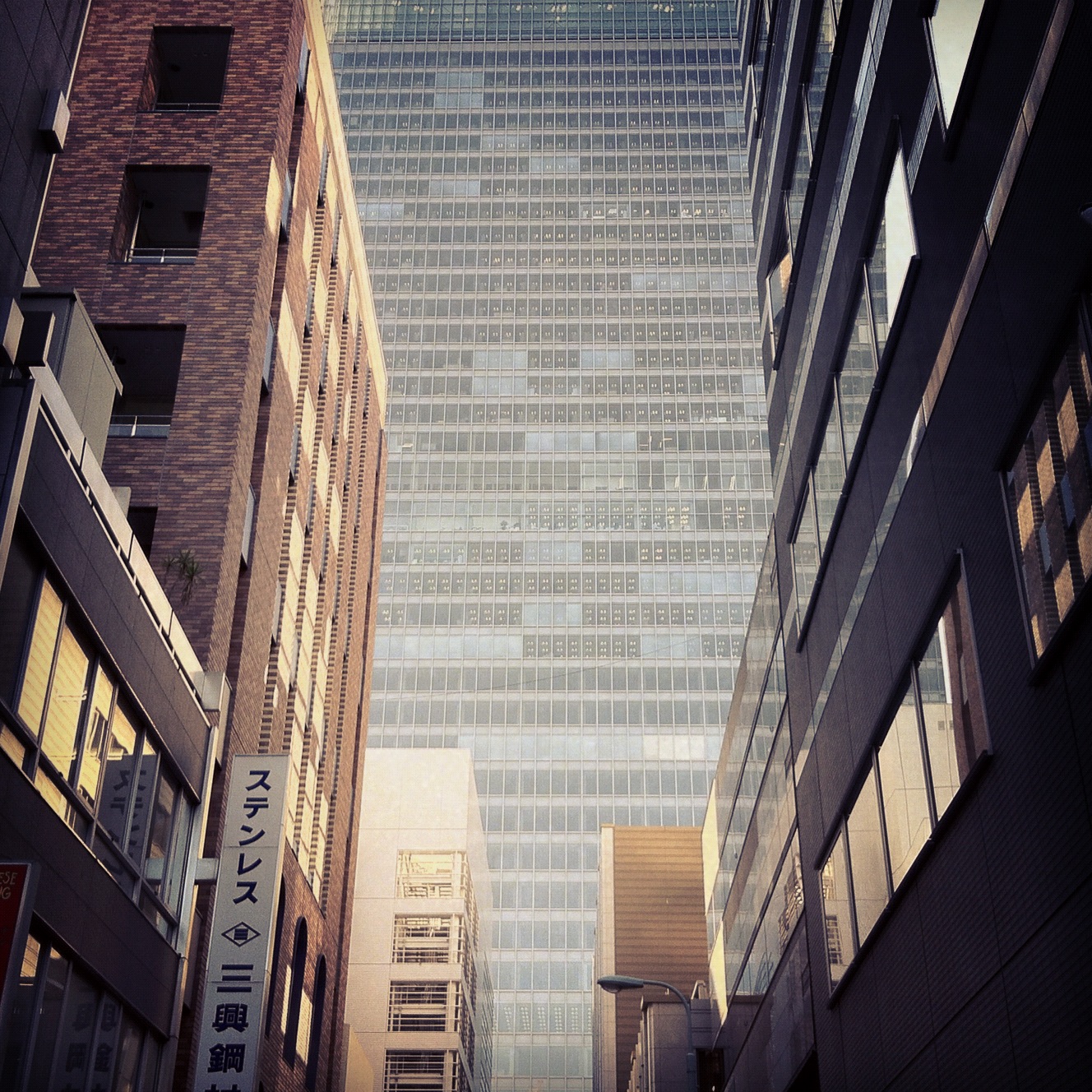
I’ve been walking quite a bit through town today. A fairly nondescript skyscraper / office building caught my eye, mainly because there was a delegation of suit-wearing business folk outside looking at the building inquisitively. A quick search and I found out it’s the brand-new Shimizu headquarters. Apparently the most eco-friendly office building in the world.
NOA building
Though his was hardly a household name, ask nearly any practicing architect of any age in Japan about Seiichi Shirai (1905-83), and the response is consistently one of admiration, if not reverence. An ardent philosopher, poet, and calligraphist whose life spanned an age of ever-increasing industrialization, Shirai the architect holds a special place in the hearts of designers today for the markedly individual and spiritual stance that informed his many works.
Susan Rogers Chikuba, taken from here
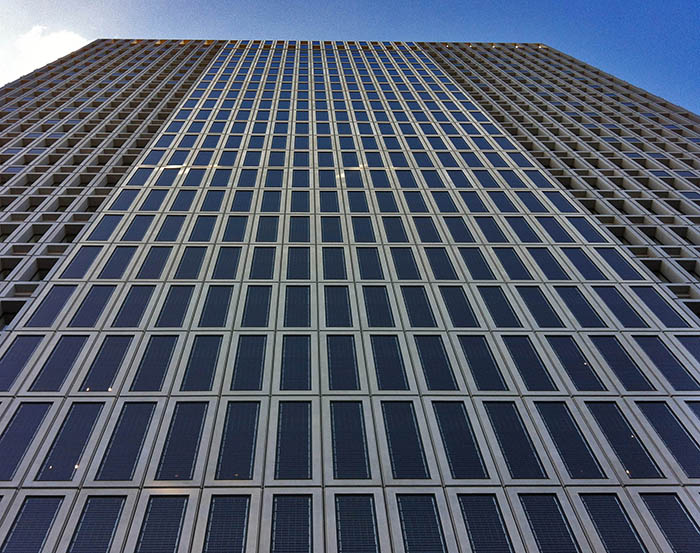
Just up the road from the Reiyukai temple is the NOA building, another architectural gem in Tokyo’s Azabu district, built in 1974. The 15-storey building consists of a red-brick pedestal of about 8 meters height and a steel-covered and sculpture-like upper part that is dotted with very few windows (although the 8th or 9th floor has a full-length one). The building’s architect, Seiichi Shirai, studied architecture and philosophy in the Berlin of the Weimar years. His most famous design has never been built.

Ukrainian winters
Part of the past occupation series: Of all the former Soviet republics bar those in Central Asia, I have been to the Ukraine the most. I spent a month in Odessa learning Russian as a student and went twice on work trips to Kiev.
Ukraine always seems to be caught in political turmoil and instability. There’s thus plenty to do for a political risk analyst, also given that the country’s bonds are the highest-yielding in Europe (of course except the peripheral EMU names). Unclear connections between the country’s business and political elite add to the flavour.
All that was at play when I went in the winter of 2009, just before Christmas. Minus 16 degrees celsius, a snowstorm sweeping through Kiev’s wide boulevards – and the threat of another gas cut looming. It’s not the most comfortable time of the year to visit. Continue reading
Reiyūkai temple
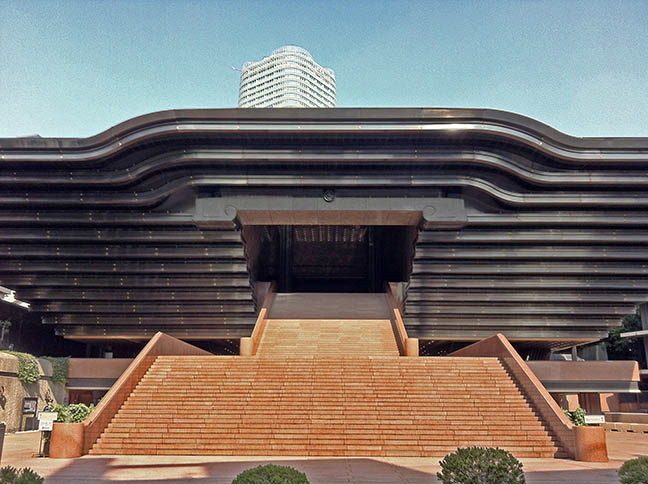
I first saw this building in passing, at night. A few days later I caught another sight. It looks like a spaceship that has fallen from the sky into downtown Tokyo. I wanted to find out a bit more and visited the Reiyukai Inner Trip temple last week. A very interesting experience, both architecturally and… well, spiritually.
Back to Beijing
Part of the past occupation series: As I prepare my third (and entirely touristic) trip to Beijing and Shanghai this December, I find that China is really the one big topic from my previous job that continues to fascinate me in my new daily life.
Trying to get to grips with China quickly became my favourite task at work, especially in the latter part of the job when I was responsible for formulating more global macro views. Although the country is neither a big fixed income nor equity market (at least for foreigners), it matters a big deal for all the obvious reasons.
I remember long and detailed discussions with one of my colleagues. We would fill flip chart after flip chart with models on China’s state-owned enterprises, its banks and theories of financial repression. Our discussions could get heated. He was more of a bear, I was a bit more bullish. For whatever that may mean today! If anything, I think he was right.
Although I had been to Xinjiang in 2004, I only visited Beijing five years later – for a whole comfortable week of tourism flanked by one and a half days of meetings with the usual mix of policymakers, analysts and diplomats. I coincided with one of my best friends from uni who had studied Mandarin for four years and had just finished a politics course at Nanjing University. I think I learned most about contemporary China from him.
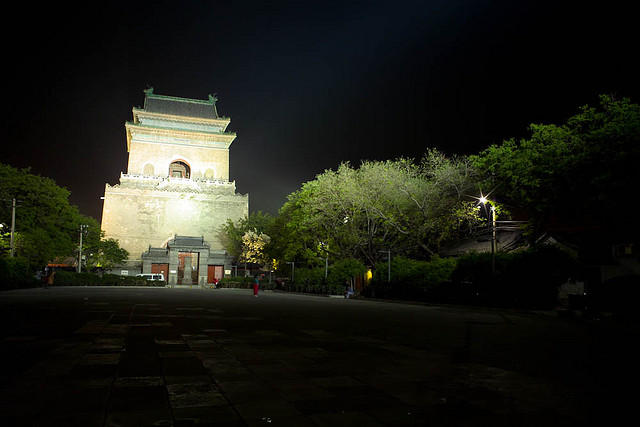
We lodged in a fairly run-down but comfortable and authentic guest house in downtown Beijing, not too far from the Bell Tower.
Two publishing ideas
Writing about Tokyo Art Space and the project’s innovative publishing strategy further established one certainty within me. Digital publishing, media creation, journalism – all that sort of stuff – must be one avenue I am going to explore further for my own professional future. (Note: this blog is partially about finding out what it is that will keep me busy once a six-month stint in Tokyo will be over.)
I like the idea (and experience) of curating information that I am interested in myself and disseminating it via a bunch of channels old and new. Against this backdrop, I have been checking out some recent Kickstarter projects.
The Eurozone crisis
Part of the past occupation series: I decided not to go into the details of the each of the trips that I went on when researching the Eurozone crisis. It is still a very current debate (I am reminded of that each morning when reading the FT over breakfast) and I continue to have my opinions. I want to reserve this space for a more personal reflection.
As 2009 drew to a close, the fund management industry appeared to look at credit risk seriously again. Before that, central banks had swamped markets with liquidity for nearly a whole year, a move that saw risky assets of all shapes and colours rally a big deal. I thought it made correlation more important than idiosyncratic risk and the life of a cherry picker like myself rather difficult. It didn’t matter if country A had a better story to tell than country B. The sovereign debt of both countries did very well – until Nakheel, a quasi-sovereign (or at least that’s what many investors thought) issuer from Dubai nearly defaulted on an Islamic bond . Continue reading
Yasukuni Shrine
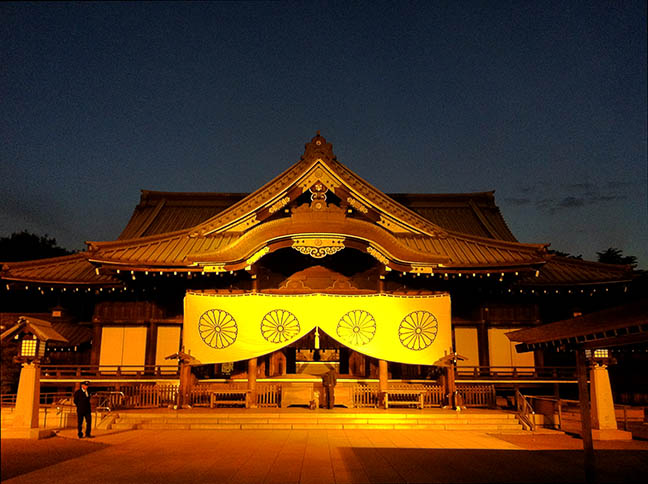
After strolling around and visiting the Museum of Modern Art Tokyo today, I took a rather long-winded walk towards Ichigaya Station to catch the Nambuko Line home. This took me past the infamous Yasukuni Shrine. It was already late and dark, so I didn’t stick around for too long (although the sight of the shrine is beautiful at that time of the day).
The shrine is devoted to soldiers who have died fighting for the Emperor. More than two million souls are remembered here, among which there are also some war criminals. I have come across the shrine frequently recently (e.g. the LDP leader and former PM Shinzo Abe paid a visit to the place last week) and it made me think again of one of my “assignments” while here: How is the wartime remembered in Japan? How is the collective memory embedded in education and popular culture?