
I just learned from the inimitable Zoe Ward on LinkedIn that the redevelopment of the Nakano Sunplaza has been scrapped. We lived a few hundred meters down the road in postgraduate student accommodation during our first 2.5 years in Tokyo exactly 10 years ago (which is when I took the photos in this post).
Located just across the station, the building has been the visual gateway to Nakano for more than 50 years. Built in 1973 by Nikken Sekkei, its major feature is actually visible from its back, but I cannot find a picture in my archive on the fly. Check out this post on this webpage for the triangular shape and the treelined upper-floor terraces.
Although it is frequently attributed to these styles and/or movements, the building is neither Brutalist nor an example of Japan’s short-lived Metabolism. The 21-storey wedge shaped building’s most innovative features, according to Watanabe’s standard architectural guide to pre-2000 Tokyo, are the two cores at the sides of the building, serving both as structural cones and supply cores. Girders bridge these cores, and the floor area shrinks as you get to the upper floors.
At the bottom of the building is a 2,500-seat auditorium which hosted legendary concerts from the 70s onwards (think Bob Marley, Nirvana, etc.). We only entered the building a few times to access the hotel restaurant on the top floor, affording unparalleled views of Tokyo.
Sunplaza was slated for demolition since the early 2020s. On its site, a new 260-meter mixed use skyscraper was to rise up. With ongoing construction cost inflation, however, the prospective costs for this redevelopment ballooned from 181 billion JPY to 300 billion JPY, eventually forcing the developer to scrap their plans.
It turns out the story is actually a little more complicated, as per this Mainichi article. Amid the rising construction cost, the developer came back with an amended plan of a twin tower and a significantly expanded residential component, at the expense of public space. This was then rejected by the Nakano Ward (whose offices are adjacent to the Sunplaza).
Apparently, Nakano Ward Assembly members argued “that it would merely result in turning the site into yet another high-rise condominium complex”. If true, this is quite a major pushback against the developer/real estate complex, with interesting (and sensible) reasoning (ageing population, benefits of refurbishment / adaptive reuse, etc.).
The Mainichi article opines that this “could become an invaluable opportunity for local governments and residents to gather their wisdom and create spaces able to serve their community’s future needs.”
Alas, a public forum to discuss the future of the site held in July last year attracted a mere 20 people. One has to wonder whether the notice for this event was displayed as “prominently” (i.e., not) as other public consultations about large urban redevelopments.
Before a new plan will be agreed on, an interim use of the site will be discussed. I look forward to visiting the area during a short trip to Tokyo later this year.
PS: If you want to learn more about (the lack of) public consultation in major urban redevelopment planning in Tokyo, check out Jessica et al’s article on the subject here.
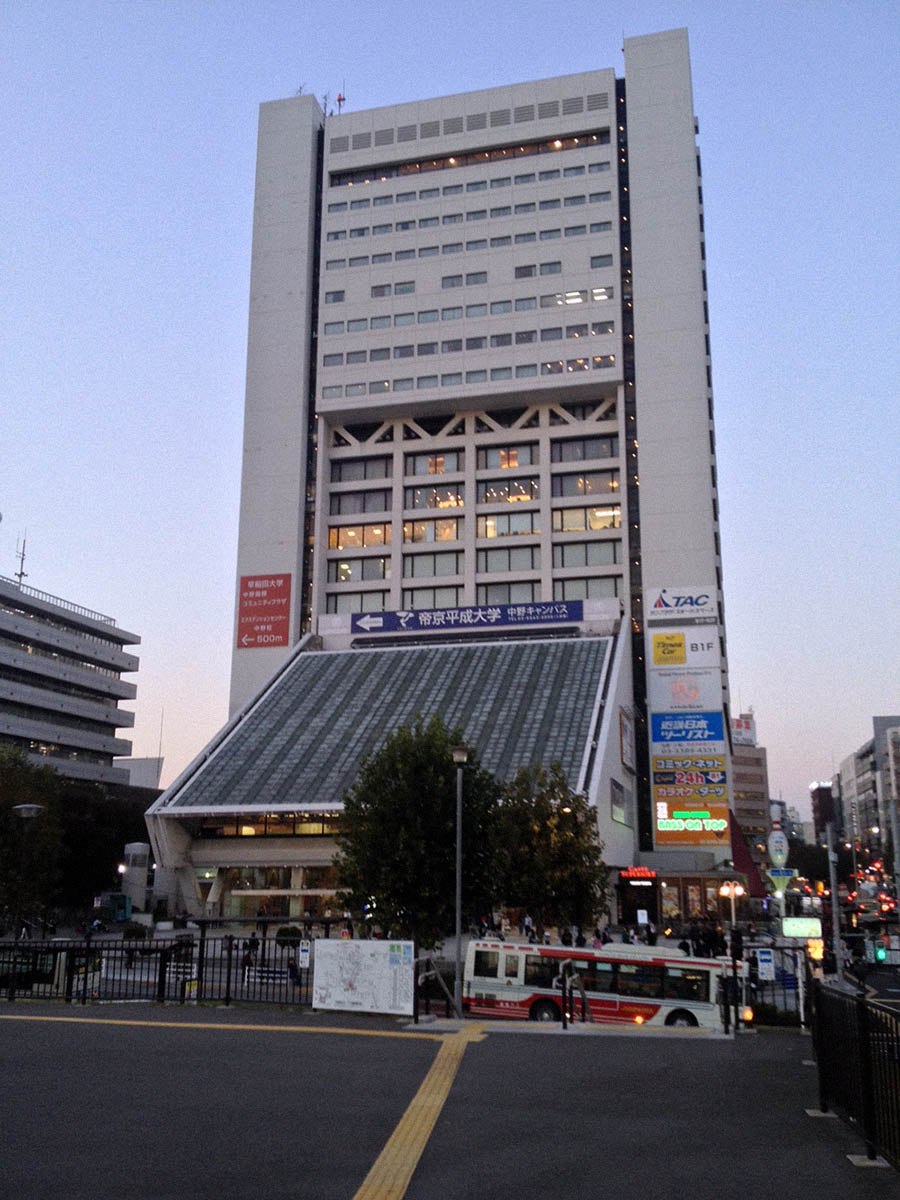


I would say it is definitely an example of Brutalist architecture, with it’s jutting jaw.