Burma thread

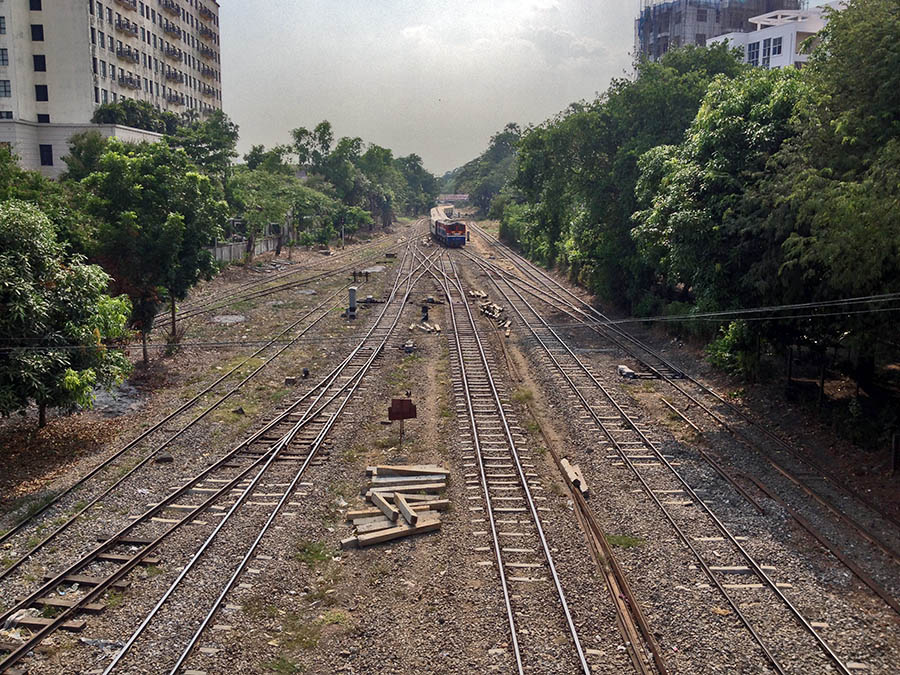
A photo taken sometime in 2013 from the railway bridge near Yangon’s Central Railway Station

I came to Burma/Myanmar for the first time in 2013 on an assignment to scrutinize the country’s “opening up” from a foreign investor viewpoint. Over the next six years, I returned on several occasions, primarily to learn more about the built environment of its former capital Yangon. The cityscape was a mirror of the rapid development the country was now undergoing: Everywhere were cranes and bulldozers, growing traffic was choking the busy downtown area, an air of change and optimism was palpable. Some colonial-era heritage buildings were becoming speculative assets, some were still forlorn and grown over by trees and bushes behind high but porous fences, while some were torn down to make space for new buildings. The growing political role of Aung San Suu Kyi’s NLD made the incumbent civilian-military leaders increasingly nervous, and a coup restored the junta to power in 2021. Since then, Myanmar is locked in a familiar-seeming chokehold of civil war, economic destitution and international isolation. Was the liberal decade just a dream? Several books help disentangle this conundrum and shine some light at this fascinating country in Southeast Asia that holds so much potential yet has fallen short to live up to the aspirations of its peoples.

Continue reading
Redesign

I started this blog in 2012. Fourteen years later, there are more than 400 posts and 250,000 words, enough for 2-3 books on here. During all that time, I resisted the temptation to redesign the page or do any other major tech improvement to my online persona. AI has changed that to some extent. While I don’t use AI for any of my writing on the blog, it does help wonders with the coding and design tweaking.

Among the major changes are a static byline at the top, welcoming new readers. Most of the traffic to this page comes from search engines (for how long, one has to wonder, in an age of increasingly reductive intra-chatbot research?). The people who click on the home link can now find clear information on where they have landed. I have also started putting together some curated posts summarizing the content on this blog in a more orderly, thematic way. There are now also photos on the right, encouraging me to pick up my old camera and go out to document the world around me visually. A better category and date archive makes navigating the page easier, especially for myself when I’m looking for something.

More than anything, this little redesign is a commitment to keep writing in this space even as new and exciting other opportunities come around. I cannot overemphasize the stability and grounding this blog has given me over the years. The next birthday post is due next year (see here for the 2017 and 2022 editions). I hope I have some exciting new stuff to report and to thank this public notepad for then.

Teaching at TUJ reading guide

Here’s an overview of the classes I developed and taught at TUJ a few years ago. They ranged from development economics to urban studies. Temple University Japan is the Japan campus of Philadelphia based Temple University. They have been around since the 1980s, and have grown significantly in the last couple of years, in line with the global appeal of Japan (and its undervalued exchange rate).

Continue reading

Tokyo thread

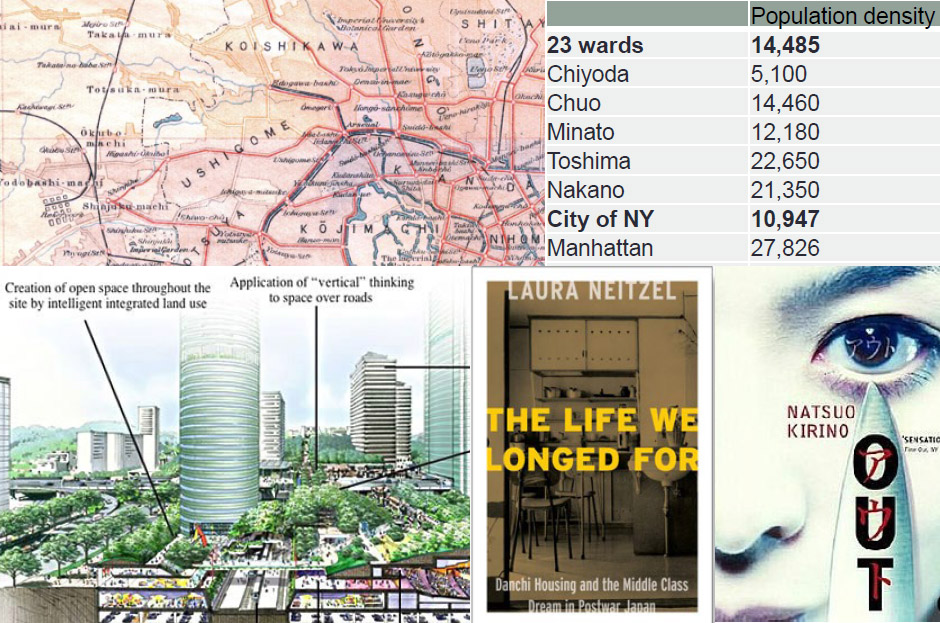
I came to Tokyo for the first time in 2012. Little did I know back then that this initial trip was to spark an intellectual love story when I later made the capital the locus of my PhD research. I explored Tokyo primarily by foot and bike, and while scaling the quiet backstreets and busy station plazas, I pondered the vivid economic history the city had seen in the postwar era. My doctorate was situating the Japanese economic miracle within Tokyo’s unique urban space, honing in on its small competitive factories and its egalitarian living standards spread–out over a gargantuan mass of low-rise and high-density housing. There are several books that accompanied me on this journey. I put some of them into this Tokyo thread, with a few others to be found on the shelves.

Continue reading