Past occupations: asset management

I was a political risk / fund strategy analyst in one of my previous incarnations. The job was within the asset management unit of an oil major, broadly charged with investing the company’s multi-billion pension assets. In that way, it is very similar to a fund manager you can find anywhere in the Londons, New Yorks, etc. The difference, though, was that big corporate culture – with its pros and cons – permeated the walls.

The job sounded perfect back then: It would marry my (then-)affection for politics and emerging markets with business, while maintaining an almost academic research bent. And travel it meant! The job description and the incumbent both told me that frequent research trips were a must. Just a bit more than a year into life in a corporate behemoth like that, that sounded very enticing.

A few interviews later, I had the job and got ready to move to The Hague. Meanwhile, the financial crisis had hit for real and saw financial markets drop calamitously and flows in asset management grind to a halt. Fantastic timing, I thought. Thankfully for us back then, life moved on and markets stabilised thanks to an unprecedented wave of central bank interventions. Riding the liquidity wave, 2009 and 2010 were actually pretty decent years for long-only funds.

Over the next weeks, I will post some memorable anecdotes from my trips around the world. I jotted them down in order not to forget them myself. But who knows, maybe others find them interesting, too.
Engaging with the Tokyo art scene

As any megalopolis, Tokyo is brimming with art galleries, museums and other cultural institutions. After seeing a few of them, and also after engaging a little more with Japanese history and culture, I have set myself a task for the next few months, an assignment of sorts: How do Japanese people express themselves through the arts? How are emotions channeled, how is social criticism conveyed? These are big questions, but then again, I have quite some time on my hands to find some answers for myself. A few ideas: Continue reading

Nakagin Capsule Tower

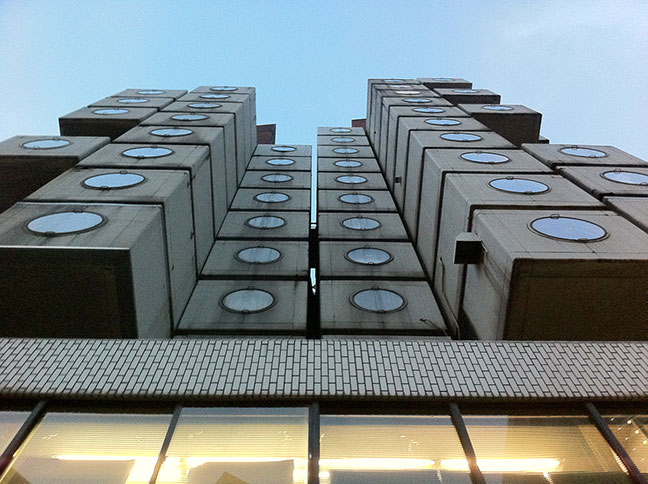
The Nakagin Capsule Tower is probably one of Tokyo’s oddest architectural sights. As an amazing example of metabolism, it stands out on an inner-city highway near Shimbashi. The house is made of capsules, each measuring 2.3 x 3.8 metres. They form stand-alone living units, replete with inbuilt kitchens and aircraft-size toilets.

Somewhat unsurprising given that no major refurbishment has taken place since it has been built in the early 70s, the residents are keen on demolishing the whole place and replacing it with something more spacious and less asbestos-ridden. Architecture buffs are up in arms, needless to say. But more likely than not, the tower won’t be standing in this space near expensive Ginza much longer.

Continue reading

Art Space Tokyo

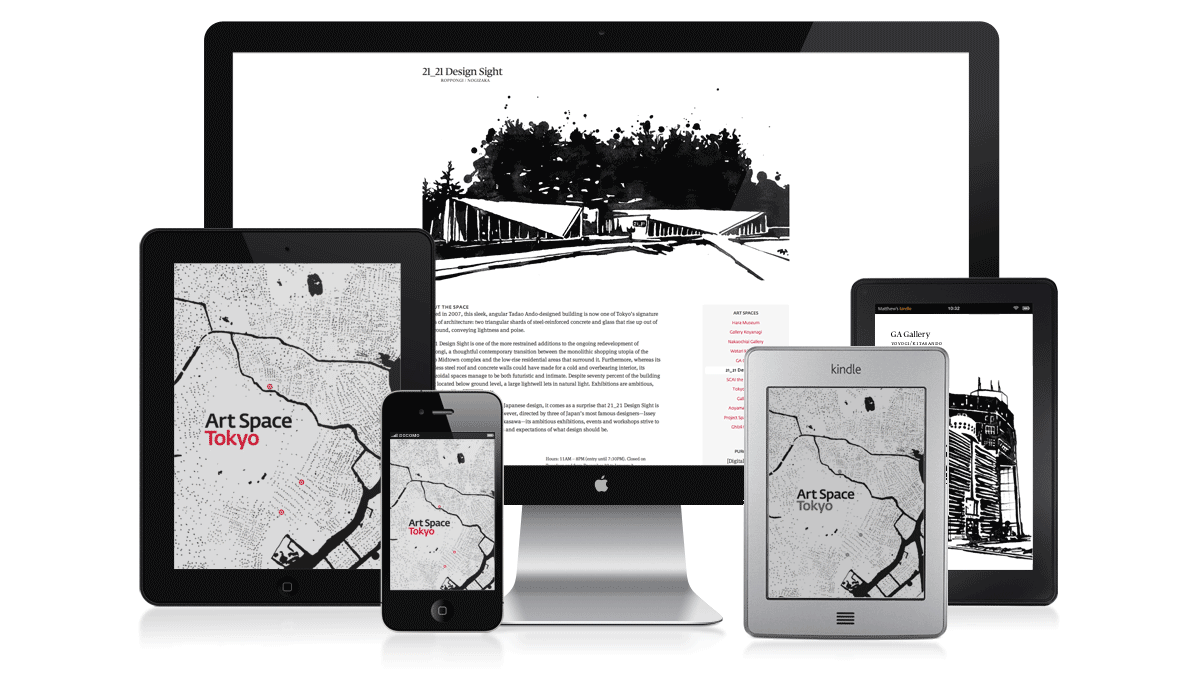
Having myself co-published a non-standard book with a crowd element to it, I was intrigued to  find out about Art Space Tokyo, a collaboration between journalist Ashley Rawlings and publisher/designer Craig Mod. They started off in 2008 by publishing a hard-copy book on Tokyo’s art scene, taking the reader through reviews of galleries as well as accompanying neighbourhood tours.

Then in 2010, they funded their second edition via Kickstarter, raising about $25k. Next, the digital edition came out in 2012 and is very interesting. Mostly for me because it makes all content from the book available for free. All reviews, essays and interviews can be read from the comfort of your chair at home as well as on-the-go, using fully responsive technology for your reading pleasure on mobile devices.

Continue reading