As my Tokyo research progresses, I have been looking a little more closely at the history of Sumida Ward, one of Tokyo’s traditional manufacturing areas. Today I took a walk from Hikifune to Ryogoku.
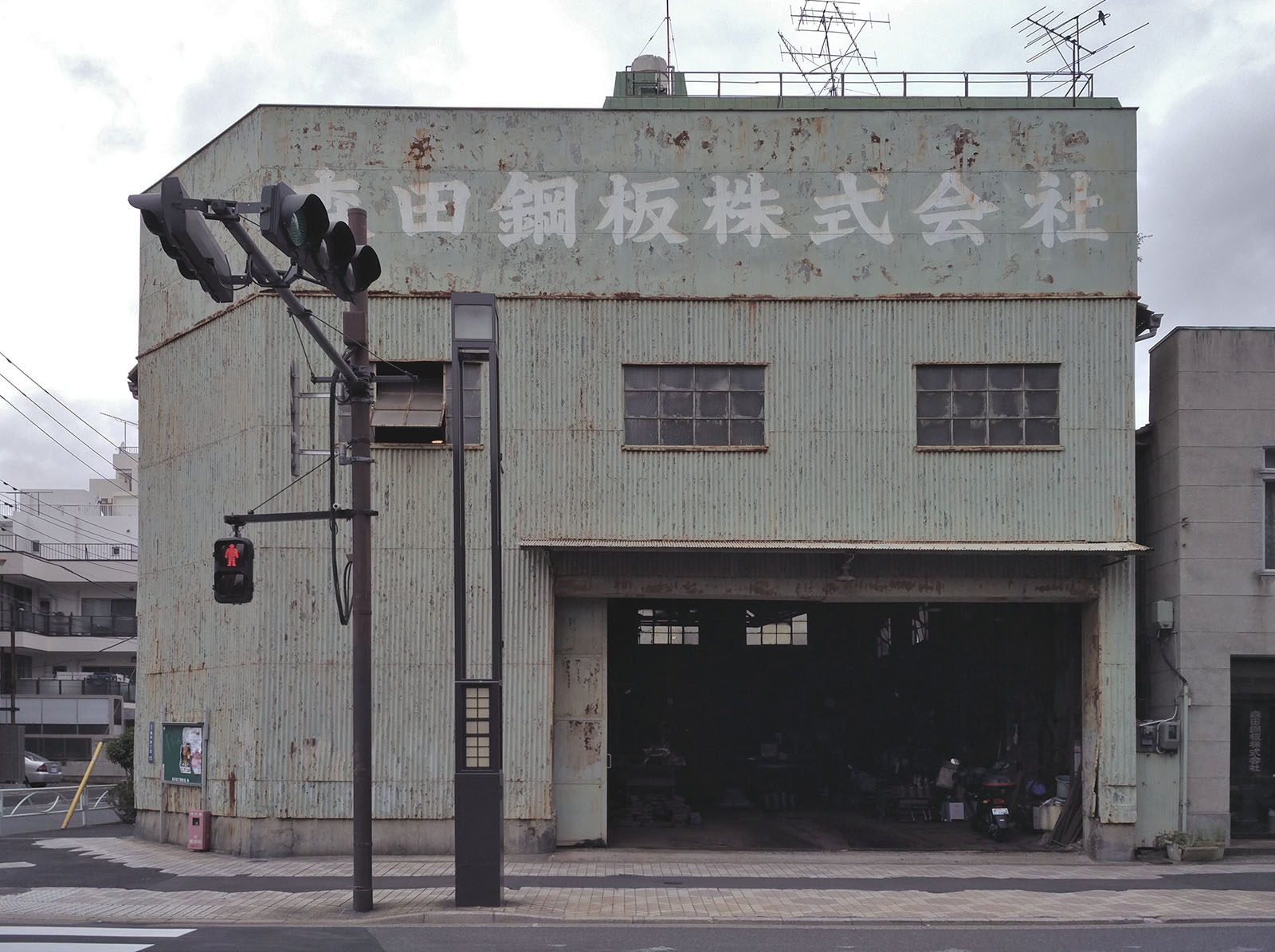
Steel plating company, Sumida Ward
As my Tokyo research progresses, I have been looking a little more closely at the history of Sumida Ward, one of Tokyo’s traditional manufacturing areas. Today I took a walk from Hikifune to Ryogoku.
Steel plating company, Sumida Ward
The second presentation I gave during the “Inheriting the City” conference in Taipei last week was on Tokyo. As with the one on Yangon, I am still debating whether I should write it up as a full-blown paper. In order not to forget what I said, herewith a summary.
Economic Miracle from Ben Bansal on Vimeo.
In his last column as the FT’s Asia Editor, David Pilling celebrates the rise of China. The parallels to Japan’s meteoric ascent — until the bursting of the bubble in 1990 — are worth spelling out, for they are often confused and conflated.

Misguided optimism?
I blogged quite regularly about Japan’s economic history when living here in 2012-13. A fellow student of mine stumbled upon one of the posts during his research. As my first paper is soon due (it will look at the “default reconstruction” of Tokyo’s urban industries), I took this as a reminder to also look here for some clues for my current research.
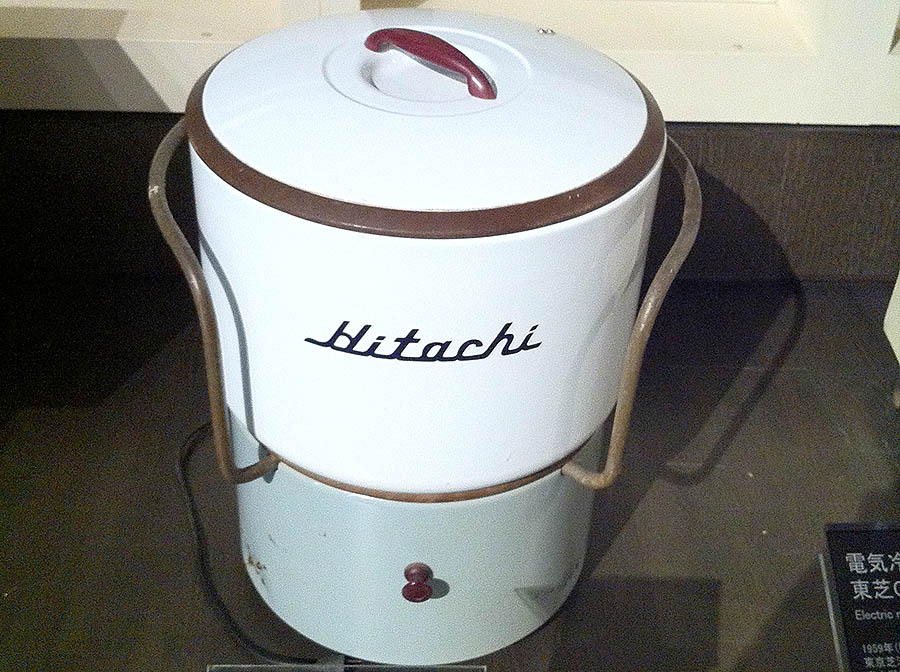
A Hitachi washing machine as exhibited in the Edo Museum (more here)
My university hosted a Planetary screening the other day. Guy, the film’s director, came along to take questions from the audience.

From time to time, I receive some comments on the by now more than 200 blog posts on this site. As I have been doing quite a lot of “before and after” photo sets, quite a few people have been able to reconnect with their own past as a result.
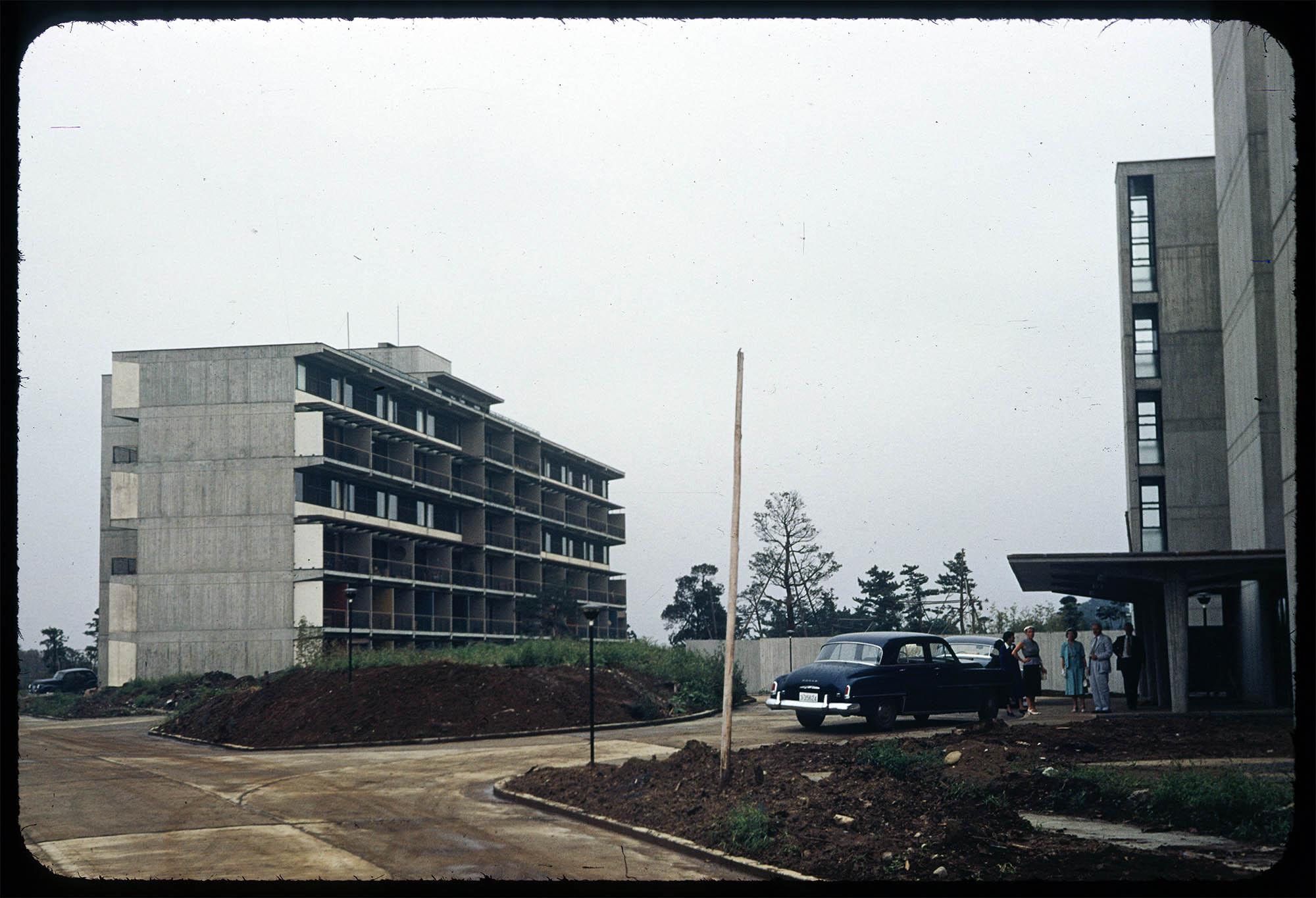
September 1953 – Perry Apartments, left, with Harris Apartments on the right (Antonin Raymond), photograph from Gerald & Rella Warner Japan Slide Collection, reproduced with permission.
Japan’s initial success after the Second World War had a lot to do with the copying of Western technology. The economic miracle of the 1960s, however, rested on Japanese firms’ ever-increasing capability to innovate. The world was to get a taste of this when thousands of spectators visited Tokyo for the 1964 Olympic Games. Kenzo Tange’s Gymnasium provided a central venue of great symbolic power.
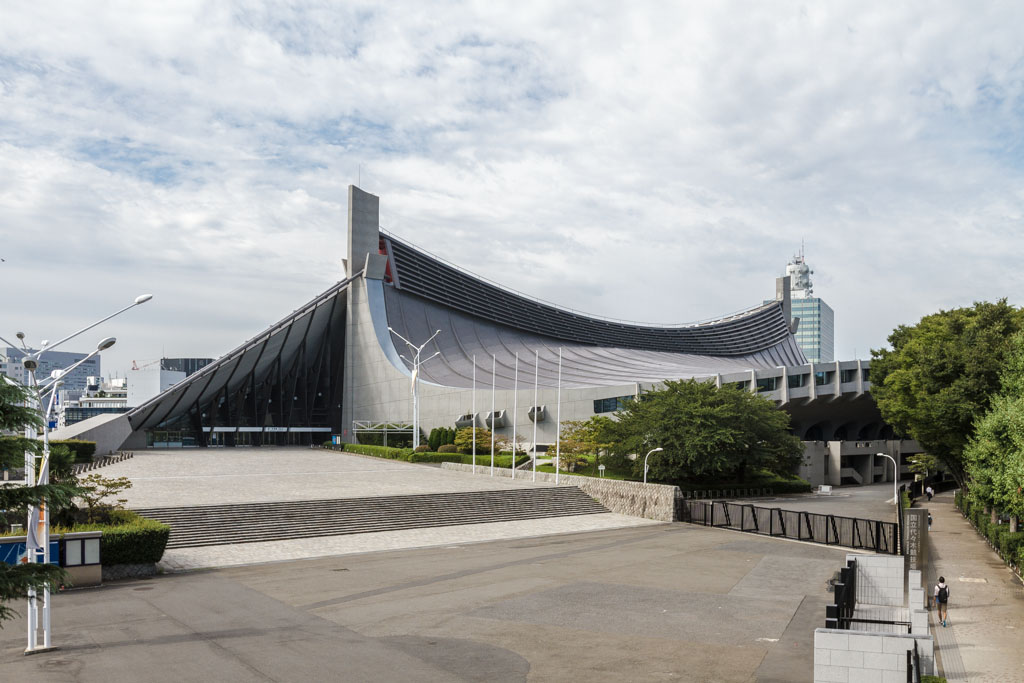
All photos by Manuel Oka (www.manueloka.com)
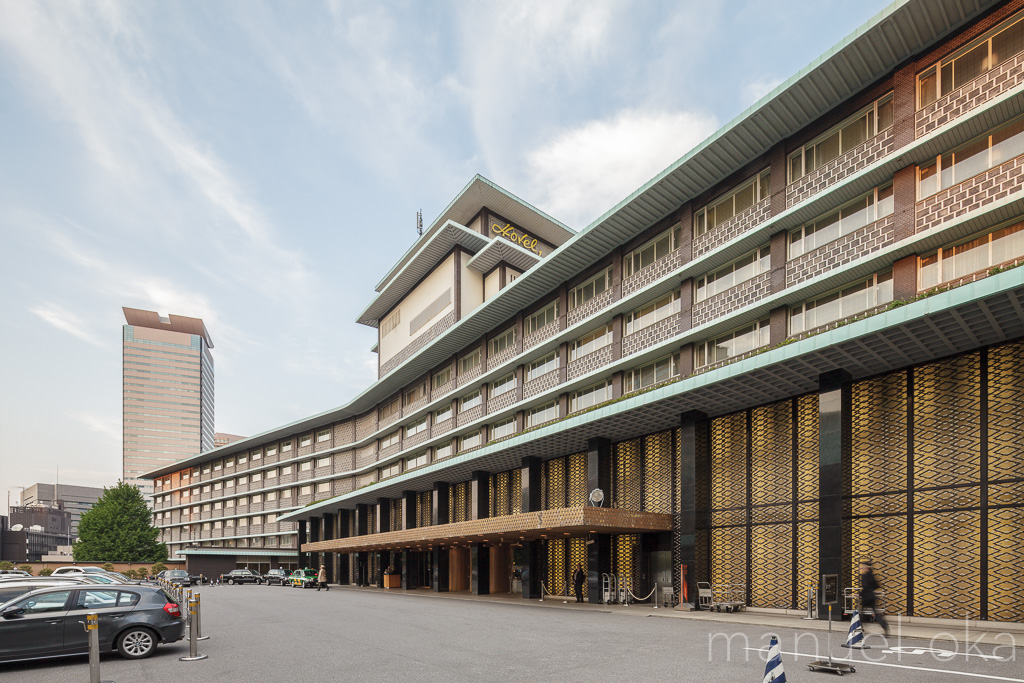
It is hard to conjure up a hotel building more emblematic than the Hotel Okura in Tokyo. In contrast to the Japanese avant-garde architecture of its days and the faceless corporate behemoths that came to dominate the city in the 1970s and ‘80s, this 1962 building synthesises traditional Japanese features with modernist architecture.
I came across this great website with photos from the centre of Fukuyama, Hiroshima Prefecture, principally taken around the city’s train station. They capture the essence of why visuals can be so powerful a tool to convey the changes that swept through postwar Japan.
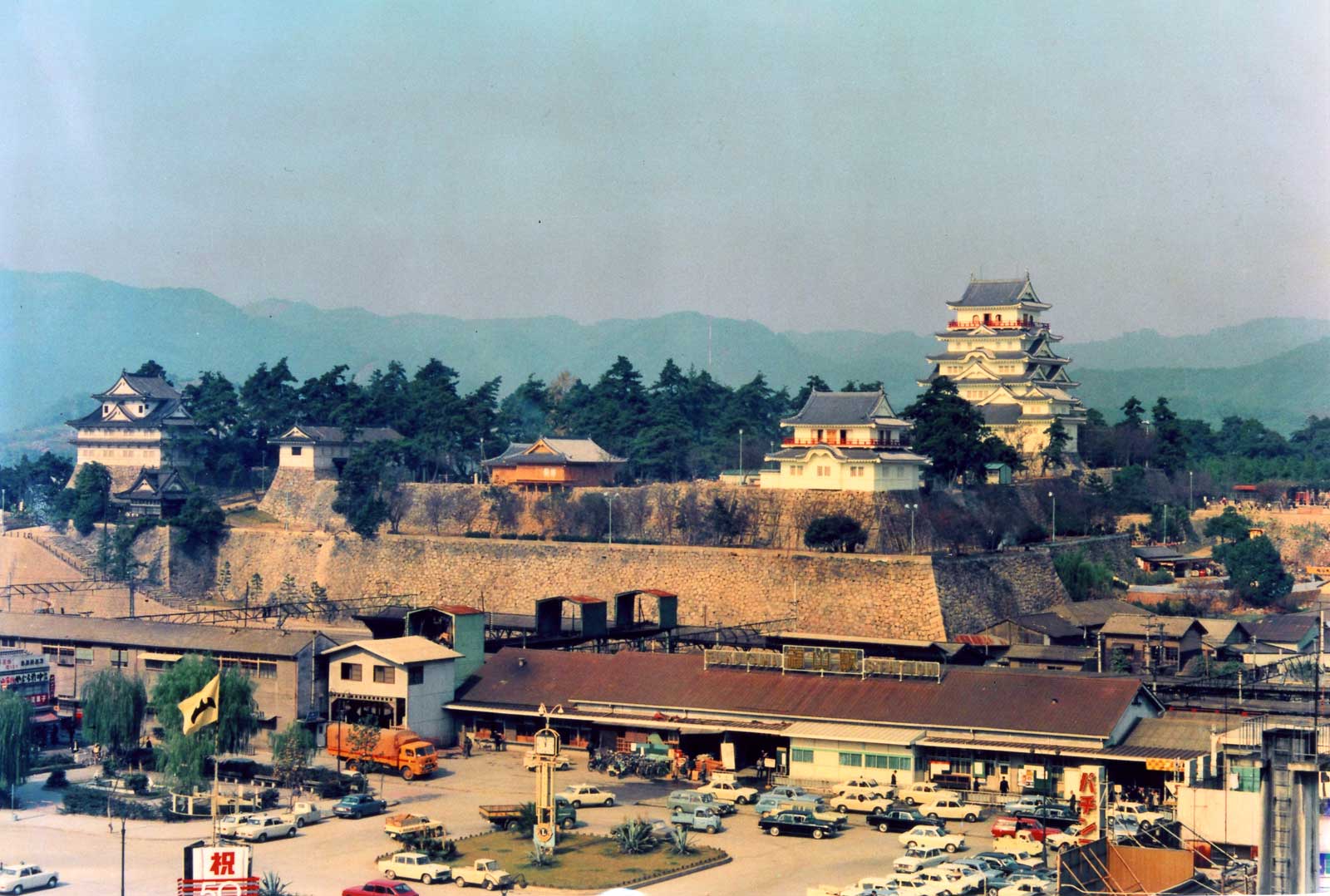
1966 postcard with station area and castle in background
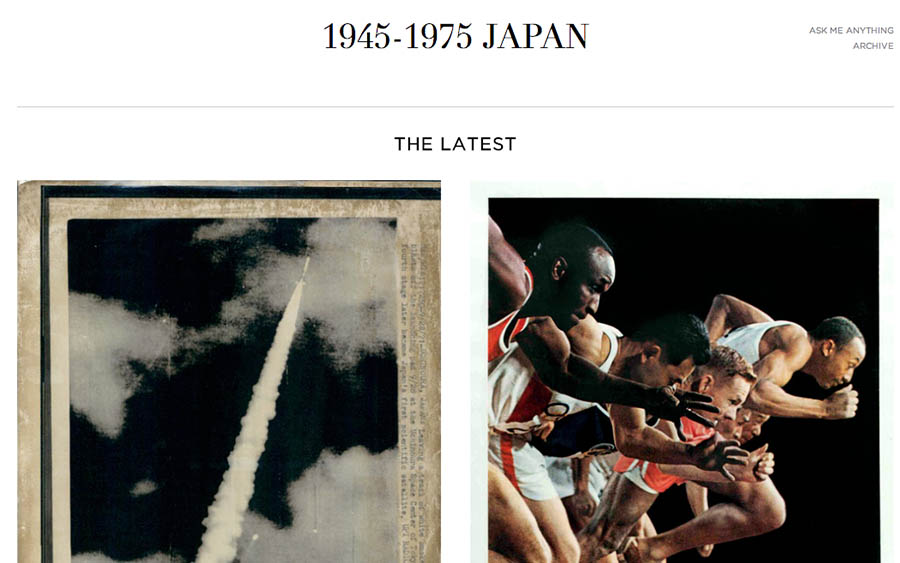
Despite all the work on the Yangon Architectural Guide, I managed to stick to a fairly regular posting schedule on my long-term Tumblr project. Time to look at some of the stats and features of the site.